Could your Edgewater home handle the next nor’easter or hurricane? Living along the South River is a gift, but storms, tidal flooding, and outages are part of life here. You want practical steps that protect your family and investment without guesswork. This guide gives you a clear plan to prepare your Edgewater home before, during, and after a storm. Let’s dive in.
Edgewater storm risks at a glance
Edgewater sits on the South River and Chesapeake Bay, so you face storm surge, high‑tide flooding, heavy rain, and strong winds. Anne Arundel County recognizes rising nuisance flooding and is planning for sea‑level rise and coastal resilience. You can review county resources on sea‑level rise and homeowner guidance in the county’s planning hub for context and local programs. Anne Arundel County’s sea‑level rise page is a good starting point.
Regional science panels project meaningful sea‑level rise in Maryland this century. Likely rise by mid‑century will make high‑tide and storm‑surge flooding more frequent. For an overview of statewide projections, see UMCES’s sea‑level rise projections.
Map your risk and alerts
Check flood maps and shoreline tools
Flood risk can vary block by block. Look at FEMA flood zones and compare with county and Maryland mapping tools that show tidal and surge scenarios. Even if you are outside a Special Flood Hazard Area, you can still experience nuisance or storm flooding.
Know your evacuation zone
Maryland’s Know Your Zone system uses A, B, and C zones for coastal surge. Find your zone and plan two routes out in case one is blocked. Start with the state’s overview from local emergency volunteers at Know Your Zone MD.
Get official alerts and outage info
Sign up for county alerts and follow guidance during storm threats. The county’s Office of Emergency Management shares preparedness, evacuation, and recovery updates. Bookmark the Anne Arundel County OEM page. Also keep an eye on utility status using BGE outage trackers like PowerOutage utility updates.
Prep your home: quick wins
- Build a household emergency kit with water, shelf‑stable food, medicines, flashlights, battery radio, chargers, cash, and copies of key documents in a waterproof bag. Aim for at least 72 hours of supplies; waterfront or low‑lying homes should consider 1–2 weeks.
- Clear gutters and downspouts, trim trees, and secure loose yard items before storm season. If you keep a boat nearby, secure gear and moorings early.
- Prepare for power loss. Charge devices and consider a portable power station or a standby generator. Use generators safely: never indoors or near openings. Review safe practices from Consumer Reports on generator safety.
- Test your sump pump and add a battery backup. Confirm the discharge line moves water away from the foundation.
Reduce flood damage early
- Get flood insurance early. NFIP policies typically have a waiting period, so do not wait for a forecast to buy coverage. Learn how coverage works and why early quotes matter at FloodSmart for agents.
- Install compliant flood openings. If you have an enclosed area below the main floor, properly sized and placed flood vents can reduce structural pressure during a flood. See FEMA’s technical guidance for details on materials and openings in FEMA Technical Bulletins.
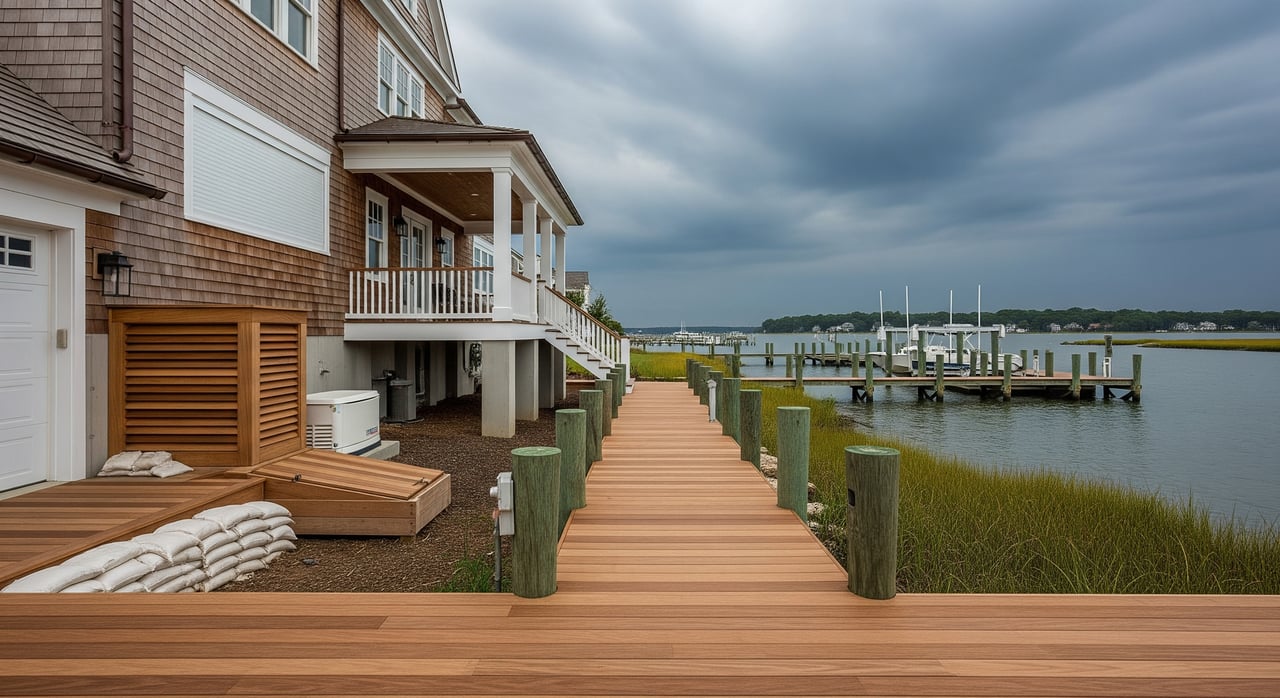
- Elevate utilities and contents. Raise HVAC units, water heaters, electrical panels, and appliances above predicted flood levels. Use flood‑resistant materials in areas that may get wet.
- Add backup power for pumping. Pair your sump pump with a high‑capacity battery backup or a transfer‑switch connection for a generator.
- Prevent sewer backup. Ask a licensed plumber about a backflow preventer on your sanitary line. For county utilities and permit contacts, start at Anne Arundel County services.
- Plan shoreline and site fixes. Larger projects like living shorelines, small floodwalls, or raising a structure require permits. Consult licensed local pros and coordinate with county Planning & Zoning early.
Insurance and permits basics
Flood insurance pricing now uses multiple property factors, not just the FEMA zone. Under FEMA’s Risk Rating 2.0, elements like distance to water, first‑floor height, and replacement cost influence premiums. Get quotes early in a transaction or improvement plan and compare options through NFIP and private carriers using resources like FloodSmart for agents.
An Elevation Certificate prepared by a licensed surveyor can still help document first‑floor height and sometimes improve NFIP rates. Ask your insurance professional to compare rates with and without an EC before you invest in one.
Most major mitigation or shoreline work will require county permits. Call the county before you start, and keep records of permits, photos, and receipts. Good documentation supports insurance rating and can boost buyer confidence at resale.
Ready‑to‑go checklists
Pre‑season (spring and early summer)
- Sign up for county alerts and NOAA weather notifications.
- Look up your evacuation zone and plan two routes.
- Update your emergency kit and store key documents in a waterproof pouch.
- Clean gutters, test the sump pump and generator, trim trees, and elevate vulnerable equipment where practical.
- Review flood insurance and ask about Elevation Certificates.
48–24 hours before a storm
- Move vehicles and valuables to higher ground and bring outdoor furniture inside.
- Secure or relocate boats early.
- Fill fuel tanks, charge devices, withdraw small cash, and confirm your family communications plan.
- If officials advise evacuation, leave early and take your go‑kit.
During the storm
- Stay inside and away from windows; move to a higher interior room if flooding threatens.
- Do not drive through floodwater.
- Run generators only outside and well away from doors and windows; keep carbon monoxide detectors powered.
After the storm
- Return only when officials say it is safe; watch for downed lines and gas odors.
- Photograph damage, tarp where needed, and start claims promptly.
- Follow FEMA guidance on cleaning and safe disposal for flooded materials.
For buyers and sellers
If you are buying in Edgewater, check the flood zone, get NFIP and private flood quotes early, and review seller disclosures for past flooding and mitigation. Ask for any Elevation Certificate, flood vent documentation, and permit history. If you are selling, organize receipts, permits, and photos for completed mitigation. Clear documentation builds trust and can support better insurance outcomes for your buyer.
When you want a local, negotiation‑first advocate who knows Edgewater’s shoreline homes and county processes, reach out to Teresa Klem for guidance tailored to your property.
FAQs
Do I need flood insurance if I’m not in a FEMA flood zone?
- Yes, flooding can occur outside Special Flood Hazard Areas; consider a quote to understand your options.
How can I see my home’s flood risk in Edgewater?
- Review FEMA flood maps, the Maryland Coastal Flood Explorer, and county sea‑level resources; for precise data, consult a licensed surveyor for an Elevation Certificate.
Does Anne Arundel County provide sandbags during storms?
- The county does not routinely distribute sandbags; check county updates and source sandbags or alternatives ahead of a forecast.
What home upgrades may lower flood damage and premiums?
- Elevating utilities, installing compliant flood vents, using flood‑resistant materials, and raising the structure where feasible can reduce losses and may improve insurance pricing.
What permits do I need for shoreline or elevation work?
- Most structural and shoreline projects require county permits; contact Anne Arundel County Planning & Zoning early and keep records for insurance and resale.